Morel is known for large voice coils, often 54 mm where competitors stay at 38 mm. The heat-exchange surface grows accordingly, which limits power compression during sustained passages.
The brand's textile domes, such as the MDT, have a low resonance that allows a crossover point around 1.8 kHz. That is useful for moving the transition out of the ear's most sensitive band.
The downside of big coils is moving mass. A Morel will go low, but it wants a generous enclosure; in a cramped box the bass closes up quickly.
Morel also makes integrated coaxial assemblies, handy when baffle height is constrained and a strong vertical lobe around the crossover must be avoided.
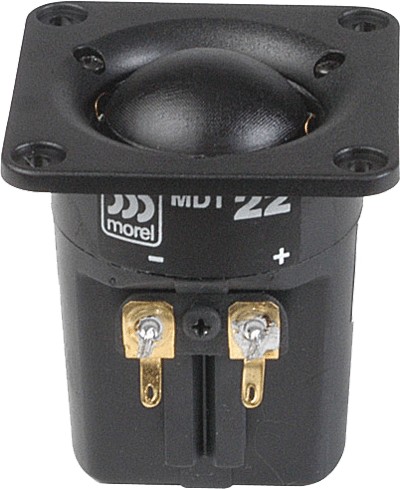
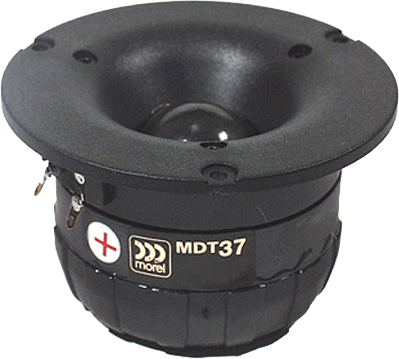
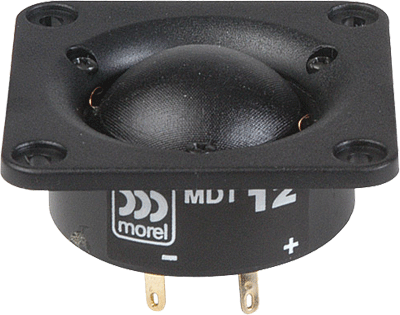
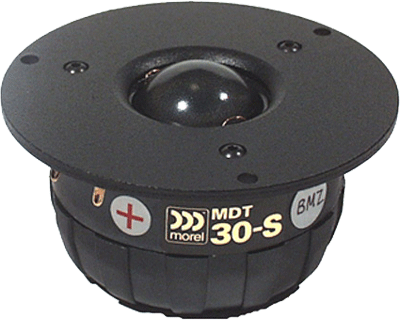
Ranges
| Series | Tweeter |
|---|---|
| Mid-Woofer | |
| Subwoofer |
In practice
The large voice coil is the reason a Morel keeps its tonal balance through a loud passage where a smaller coil heats, raises its resistance and quietly loses output. The effect is gradual and easy to miss at low volume, which is why it rarely shows up in a short comparison.
Against that, the moving mass is higher than the diameter suggests. Check Vas before committing to a cabinet: a Morel that looks like a direct replacement for a 17 cm woofer may want noticeably more volume behind it.
Voice coil and dome
| Voice coil | 54 mm typical | vs 38 mm common | Less compression |
|---|---|---|---|
| MDT dome | Textile | Low Fs | Crossover from 1.8 kHz |
| Mid-woofer | Generous volume | Higher moving mass | Needs box space |
| Coaxial | Integrated | Single axis | No vertical lobe |