Resistors handle tweeter attenuation and impedance-correction networks. MOX (metal oxide) types are non-inductive, unlike classic wirewound parts which add stray inductance exactly where it is not wanted.
Rate them generously. A resistor that heats up drifts in value, and the tonal balance of the speaker drifts with it. Ten watts for tweeter attenuation is a safe choice.
An L-pad, one resistor in series and one in parallel, attenuates the tweeter while keeping the impedance seen by the filter constant. A single series resistor shifts the crossover point, which often surprises builders afterwards.
The attenuation needed follows from the sensitivity difference between drivers. Three decibels between a dome tweeter and a 17 cm woofer is common, and ignoring it yields an aggressive speaker.
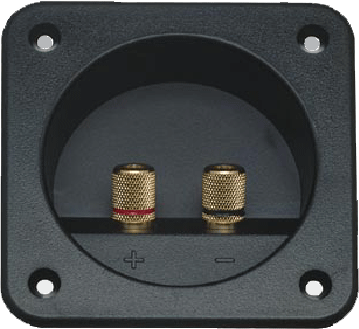
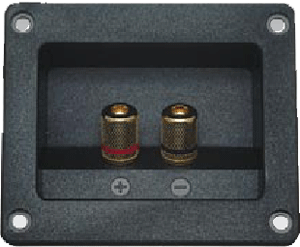
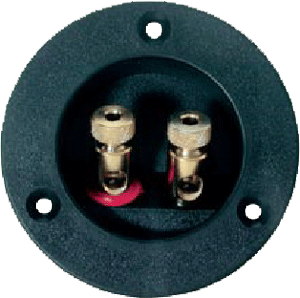
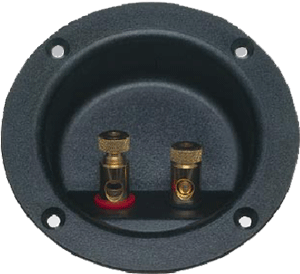
Variants
| References | MOX 4 W |
|---|---|
| MOX 10 W | |
| 6 W 1 % |
In practice
Attenuation is almost always needed, because tweeters are usually more sensitive than the woofers they are paired with. Building without it and judging the result by ear leads to the familiar bright, tiring speaker that sounds impressive for ten minutes.
Set the value by measurement, then live with it for a week before adjusting. Half a decibel either way is audible over long listening and invisible in a quick comparison, so the final trim is a judgement made slowly.
Attenuation networks
| MOX | Metal oxide | Non-inductive | Preferred |
|---|---|---|---|
| Wirewound | Adds inductance | Avoid in filter | Unless non-inductive |
| Rating | 10 W typical | Value drifts when hot | Rate generously |
| L-pad | Series + parallel | Keeps impedance | Crossover unchanged |