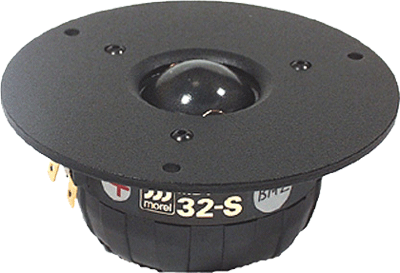
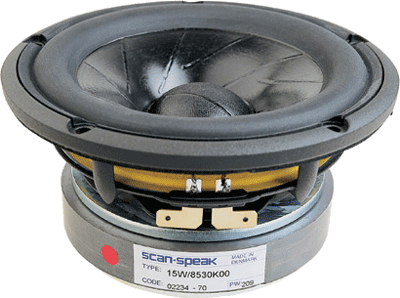
The first mistake is choosing drivers before the project. A prestigious tweeter and an excellent woofer do not make a good speaker if they do not meet: their working ranges must overlap generously around the intended crossover.
The second is neglecting the cabinet. A panel that vibrates radiates, and that radiation arrives delayed. Internal bracing costs a few euros of plywood and changes the result more than a premium capacitor.
The third is copying a published crossover while swapping one driver. The filter compensates for the specific flaws of the models it was designed around; transposed as is, it corrects nothing.
Finally, many projects stop at first assembly without extended listening. Some faults, such as slight tweeter over-attenuation or a cabinet resonance, only emerge after several hours across varied material.
A fifth mistake deserves its own line: buying the enclosure plan before the drivers. Published cabinet dimensions encode the parameters of specific units, and the volume that suited them is rarely the volume that suits whatever is actually available now.