Connectors do not improve the sound; they avoid degrading it. An oxidised or loose contact introduces a variable resistance and sometimes an audible non-linearity.
What matters is contact pressure and material: plated brass or copper, with a firm mechanical clamp. The rest is finish.
On a speaker terminal, conductor cross-section matters more than the metal. Three metres of 2.5 mm² cable already adds meaningful resistance in front of a four-ohm load, and that adds to the crossover's own.
For internal wiring, plain multi-strand copper of adequate section, properly soldered, does the job. Crimped but unsoldered lugs eventually oxidise inside a ported cabinet.
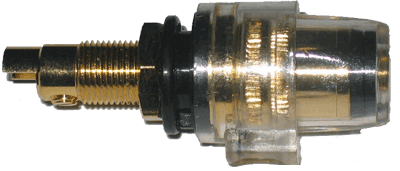
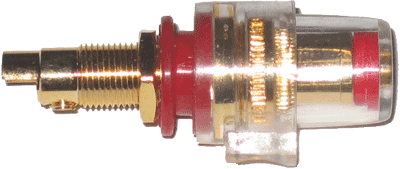
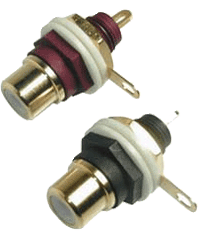
Variants
| References | Binding posts |
|---|---|
| Banana plugs | |
| Spades | |
| RCA | |
| Terminals |
In practice
Most connector problems are assembly problems. A terminal tightened onto insulation rather than copper, a crimp made with pliers, or a joint left unsoldered inside a ported cabinet will all work at first and fail slowly as oxidation builds.
If a speaker develops an intermittent channel, check the internal wiring before suspecting the driver. The vibration inside a working cabinet is more than enough to loosen a marginal connection over a few years.
What actually matters
| Contact pressure | Firm clamp | Plated brass or copper | Not the metal |
|---|---|---|---|
| Cable section | 2.5 mm2 over 3 m | Adds resistance | Before a 4 ohm load |
| Internal wiring | Soldered multi-strand | Not crimp alone | Oxidation |
| Bi-wiring | No gain on one amp | Bi-amping differs | Active filter |