The inductor sets the low-pass slope. Its main flaw is not inductance but series resistance: every ohm placed in front of an 8-ohm woofer costs sensitivity and changes the damping factor.
Air-core inductors avoid saturation entirely, but at high values they become bulky and resistive. Ferrite or Ferrobar cores keep resistance low for the same inductance, at the risk of saturating at high level.
A simple rule: air core for treble and midrange, cored parts for large bass values, checking the rated current.
For a given value, doubling the wire gauge halves the resistance but multiplies size and price. On the woofer branch that is worth the effort; on a tweeter notch filter, a thin inductor will do.
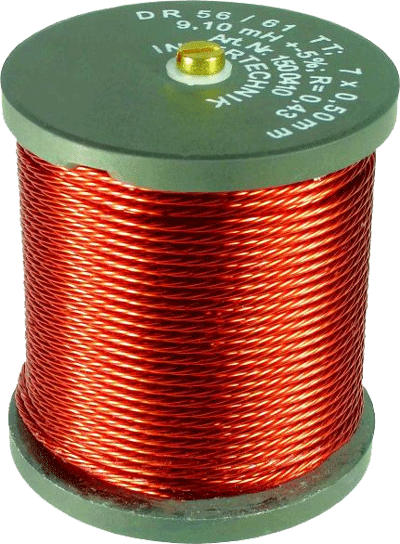
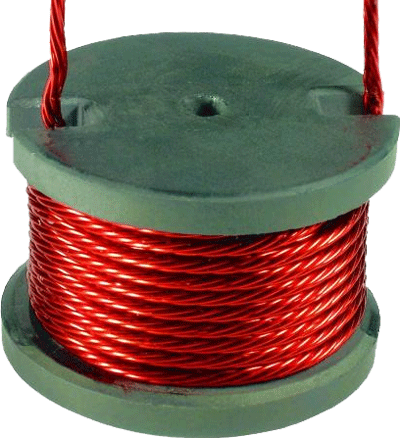
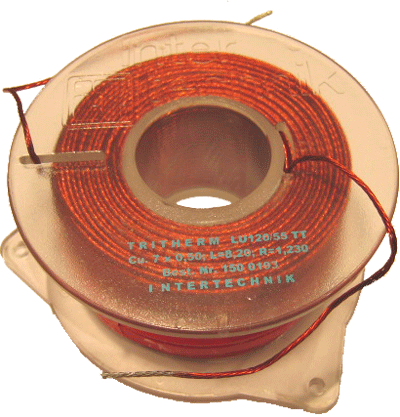
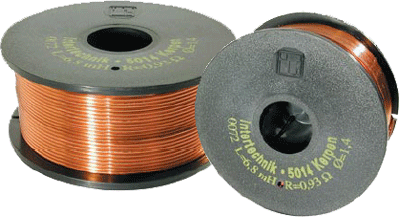
Variants
| References | Air core 0.79 mm² |
|---|---|
| Air core 1.54 mm² | |
| HQ ferrite | |
| Copper foil | |
| Tritec Ferrobar |
In practice
Series resistance is the figure that matters and the one least often published. Two inductors of identical inductance can differ enough in DCR to shift sensitivity audibly on the woofer branch, which changes the balance against the tweeter and therefore the attenuation needed.
Mount large inductors at right angles to each other, or far apart. Two coils lying parallel and close will couple magnetically, and the filter then behaves differently from the one that was designed.
Core type by position
| Air core | No saturation | Treble, midrange | Bulky at high values |
|---|---|---|---|
| Ferrite | Low resistance | Bass branch | Can saturate |
| Ferrobar | Low resistance | Large values | Check rated current |
| Copper foil | Very low DCR | Woofer | Costly, large |